


Introduction
It goes without saying that we are all products of our choices.
What is said far less often is how early those choices begin— and how much they are shaped by the conditions we inherit rather than select.
I still remember the words of my friend, Dr. Collaros, spoken plainly, without drama:
“You could turn out exactly like your father—or you could become the complete opposite.”
At the time, it sounded philosophical.
Years later, I understood it was neither philosophy nor judgment—it was responsibility.
Growing Up Where Options Were Few
I grew up in the largest workers’ suburb in Eastern Europe, under a grey communist system where aspiration was muted and conformity was rewarded.
I did not know there was another way to live.
What I knew was fighting.
What I knew was theft.
What I knew was how to survive and feel alive.
I was the child other parents warned their children about.
Don’t associate with him. He’s a loser.
By the standards of that time, I may have been considered a loser.
Everything shifted when my grandfather took me out of juvenile detention, placed his hand on my shoulder, and said something that would quietly shape the rest of my life:
“You have one chance. I love you. I will use everything I have to help you—but you must choose.”
He enrolled me in military school.
Not because it was easy—but because discipline is often the last refuge when chaos has ruled for too long.
A few years later, at eighteen, I entered the war.
I stayed behind to look after my grandparents because they believed in me. My grandparents supported my dreams, even when having them was considered dangerous.
All I truly needed then was love — and someone willing to stand beside me when I had very little to offer in return.
Watching Others Leave—and Learning What Fear Looks Like
At the same time, I watched the so-called alpha males and A-grade students quietly leave the city.
Many departed with their families.
Some followed my own father.
The unspoken belief was simple: War is for the poor. For the weak. This is especially true for those at the bottom of society.
Translated honestly, it was not superiority.
It was fear — fear of death, fear of loss, fear of discovering that status and intellect offer no protection when life turns hostile.
I stayed.
Not because I was fearless—but because loyalty and love had already taught me something fear never could.
Becoming a Father Without Instructions
Twelve years later, I became a father.
My son, Matteo, faced trials from the very beginning—epilepsy among them.
There is no manual for that moment.
No training prepares you for loving someone whose future feels fragile and uncertain.
All I knew was this:
I loved my son.
And I would do everything within my power to help him reach his dreams—even when I did not know how, when, or with what resources.
As parents, sometimes all we can do is what life had already taught me long ago:
adjust, adapt, improvise.
Through brain surgery, recovery, and the long road of healing, I watched something remarkable form quietly in him — an insatiable thirst to be like other boys.
To drive.
To go to the gym.
To be free.
To live without pity.
To live without being defined by a diagnosis.
The Discipline That Changed Me
There was another moment — quieter, easy to miss — that changed me just as profoundly.
I began observing Matteo waking up every morning at 4 a.m.
No alarm.
No encouragement.
No one is pushing him.
He would simply get up and go to the gym.
Not to impress.
Not to prove anything.
Just to do the work.
At first, I watched as a father.
Subsequently, I began to observe as a student.
Day after day, that discipline outshone any motivational speech I had ever heard, even those I had personally delivered, shaped by war, training, and endurance.
Eventually, without ceremony, I followed his lead.
Now, I wake at 4 a.m. too.
Not because I must—but because I learned.
Turning the Impossible into the Possible
Nothing happened overnight.
Weight was lost.
Confidence was built.
A driver’s license was earned.
Relationships formed.
And then came something deceptively simple yet deeply symbolic:
Running.
First, the idea.
Then the attempt.
Then the commitment.
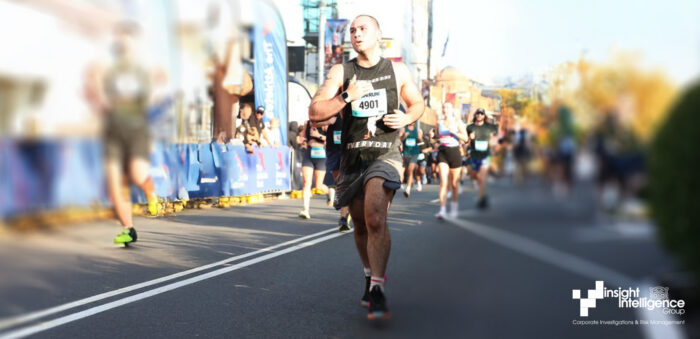
Matteo chose to run 10-kilometer races.
What was once impossible became possible—not through slogans, but through choice, consistency, and quiet courage.
When I watched him run his first race, something settled inside me.
He stood confidently.
Strong—not only in body, but in mind.
Clear about one thing only: run forward and reach the finish line.
In that moment, pride was present—but not the loud kind.
It was the realization that I was no longer only guiding him.
I was learning from him.
A Run That Means More Than Distance
In 2026, the Manly Sun Run will proceed with both 7-kilometer and 10-kilometer courses.
The race will begin at The Strand, Dee Why, and finish at South Steyne, Manly, passing through Curl Curl, Freshwater, and Queenscliff—a stunning stretch of coastline.
For many, it will be just a run.
For us, it is something more.
Watching Matteo’s mother smile — seeing her finally able to take a deep breath as she watched her child accomplish what once seemed unreachable — was a quiet acknowledgment of her unwavering support, love, and guidance throughout his journey.
Her strength, often unseen, lives inside that finish line too.
For us, it is a living reminder that impossible is not a diagnosis.
It is often just a moment in time—waiting for the right choice.
And if we are wise enough, humble enough, and present enough – our children may show us exactly how to make it possible.